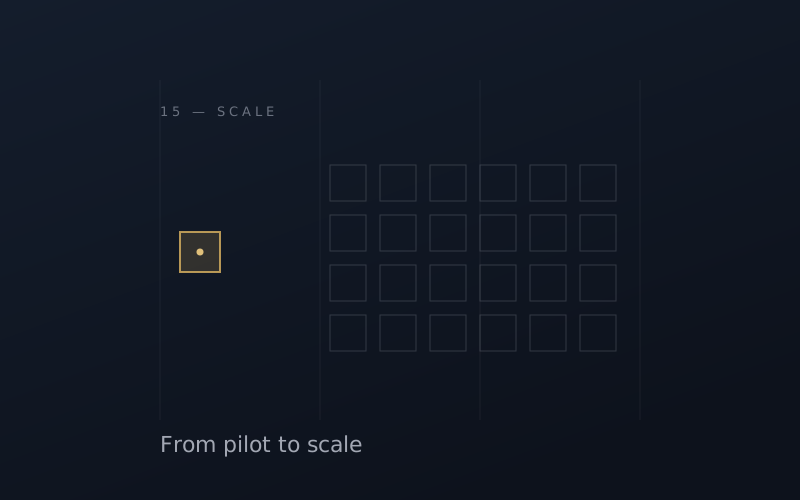
The AI pilot worked. That is exactly why it failed. A controlled demo with curated data and a willing volunteer tells you almost nothing about what happens when the same capability meets a real workflow, messy inputs, and someone who never asked for it.
The pilot succeeds in a place real work never happens
Pilots are designed to remove friction. We hand-pick the use case, clean the data by hand, sit with the one enthusiast on the team, and celebrate when the numbers look good. None of those conditions survive contact with production. The data is incomplete, the workflow has exceptions the pilot never saw, and the people downstream have their own way of doing things.
So the capability that shone in the corner stalls in the building. Not because the model got worse, but because the environment got real.
A pilot answers "can this work?" Scaling answers "can we run this, every day, when no one is watching?" The first is a technology question. The second is an operating-model question, and it is the only one that pays.
Scaling is an ownership problem wearing a technical mask
Ask who owns the workflow after the pilot ends and you often get silence. The data team built it, the business borrowed it, and no one signed up to maintain it, monitor it, or absorb the support load when it drifts. A capability with no owner is not a product. It is an orphan with a demo.
What carries an AI initiative from corner to enterprise is unglamorous: clear ownership, a path to production, monitoring, and the workflow redesign that lets people actually use the thing. I have watched well-funded pilots die for want of a single named owner.
Fund the second mile
Most budgets stop at the demo, which is where the easy part ends. Treat the pilot as the cheap question and the scale-up as the real investment. Design for the day the volunteer is on holiday, the data is dirty, and the workflow looks nothing like the slide.
A pilot you cannot scale is not a step forward. It is an expensive way to feel like one.