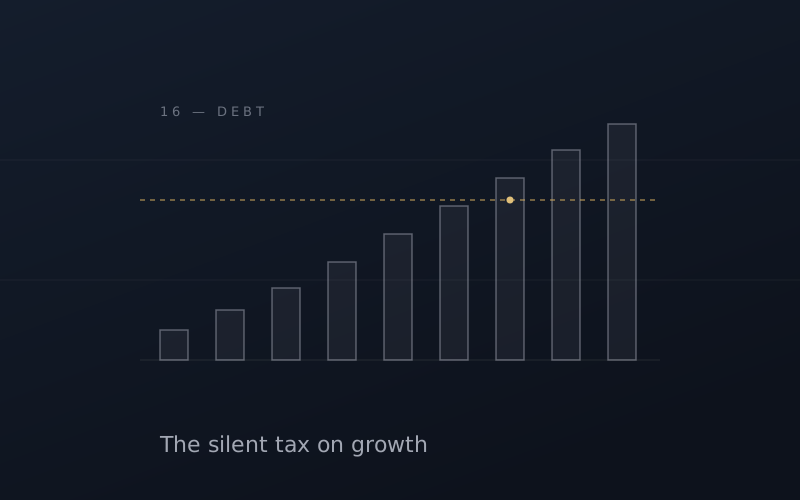
Engineers have a name for the shortcuts that pile up in a codebase: technical debt. Operations has the same thing and almost no name for it. Every manual workaround, every one-off exception, every "for now we just handle it by hand" is a loan taken against the future. The interest comes due exactly when you try to grow.
Debt that nobody recorded
Operational debt accumulates invisibly because each piece is reasonable on its own. A special process for one large customer. A spreadsheet that bridges two systems that never talked. A rule that exists only in one veteran's head. None of it breaks anything today. Together, over years, it forms a web of exceptions that only a few people can navigate and no one can fully explain.
The cost shows up as a ceiling rather than a crash. You can run the business at its current size. But every attempt to scale, to enter a new market, to onboard faster, runs into the same drag: the workarounds do not scale with you. What was a clever shortcut at small volume becomes the constraint at large volume.
Healthy operations are not the ones with no exceptions. They are the ones that know exactly what their exceptions cost.
Pay it down on purpose
You will never run an exception-free operation, and you should not try. The discipline is not avoiding debt; it is refusing to let it stay invisible. Name the workarounds. Track where the manual saves are. Treat each one as a deliberate liability with a cost, not a clever habit to be quietly proud of.
In my experience the organizations that scale cleanly are not the ones that never cut corners. They are the ones that circle back. They retire a workaround for every two they take on, and they do it before growth forces their hand.
Debt is not the problem. Pretending it is free is. The bill always arrives, usually on the day you most need to move fast.