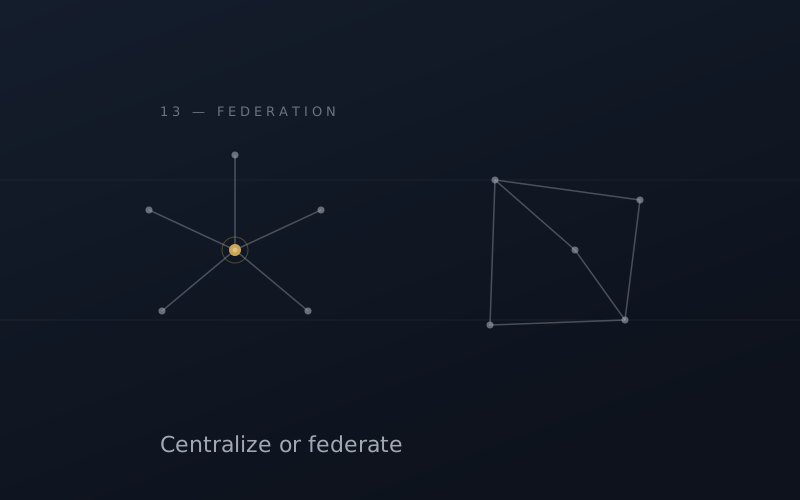
There is no right answer to centralize or federate, which is why the debate never ends. Every few years the pendulum swings, a new leader arrives convinced the last regime got it backwards, and the reorganization begins. Both camps are half right, and that is the whole problem.
Each choice buys one thing and bills you for another
Centralizing buys leverage. One standard, one platform, one negotiation, economies of scale, and a coherent whole. It bills you in speed and context: decisions travel further to get made, and the center rarely feels the texture of a local market.
Federating buys speed and fit. Decisions sit close to the work, teams adapt to their context, and accountability is obvious. It bills you in duplication and drift: five teams solving the same problem five ways, and a coherence that quietly erodes.
Neither is a strategy. Each is a trade, and the only question worth asking is what you are willing to pay for where.
Centralize for leverage. Federate for context. The art is in the seam: knowing which decisions are the same everywhere, and which are different in ways that matter.
Sort decisions, not departments
The mistake is to centralize or federate the whole organization, as if it were one kind of thing. It is not. The useful move is to sort by decision. Things that benefit from scale and sameness belong at the center: core platforms, security, the data definitions everyone shares. Things that depend on local knowledge belong at the edge: how you serve a particular customer, how you adapt to a particular market.
So I do not ask leaders whether they are centralized or federated. I ask, decision by decision, where leverage beats context and where context beats leverage. That conversation is harder and far more productive than moving everything to one pole.
Stop swinging the pendulum
The next reorg that flips the whole company from one model to the other will be reversed by the one after it. Resist the swing. Draw the line decision by decision, hold it, and let the seam, not the slogan, do the work.